Dalilaroids, Fundació Gala-Salvador Dalí, 2024


At the beginning of 2024, collector and Dalí expert Pere Vehí acquired a collection of SX 70 Polaroids from residents of Cadaqués who had frequented Salvador Dalí and Gala. The authorship of these photographs cannot be established with certainty. Some were presumably taken by Dalí or Gala, while others may have been made by members of their circle. Their subjects range from portraits of visitors to the house in Port Lligat and excursions to Cap de Creus to close ups of rocks and domestic objects, possibly photographed as visual studies. Some of the Polaroids have also been altered with ink or gouache.
Shortly after Polaroid introduced its instant photography system, its founder, Edwin Land, sought to associate the new technology with some of the leading cultural figures of the time. Artists such as Andy Warhol, David Hockney, and Salvador Dalí became central to the company’s advertising campaigns, reinforcing the relationship between Polaroid’s technological innovation and the avant garde. Following Dalí’s first collaboration with the company in 1972, Land continued to present him with each new Polaroid camera model as it was released. For Dalí, the cameras became both playful objects and creative tools.
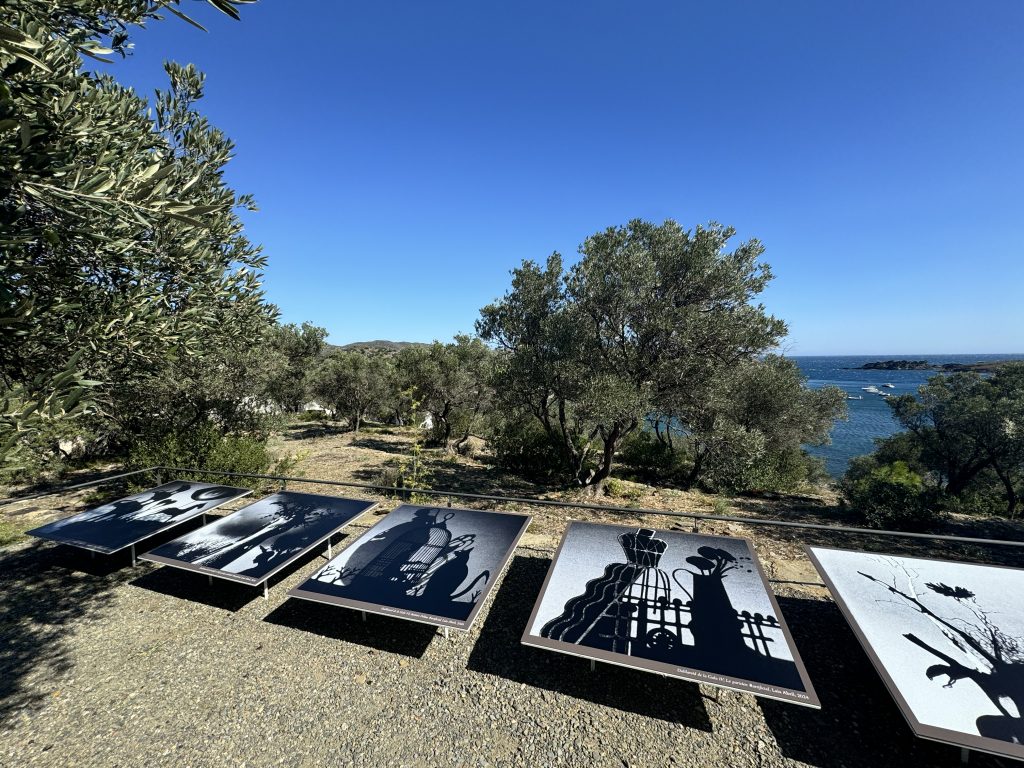
Laia Abril and Joan Fontcuberta have taken the discovery of these Polaroids as the starting point for two new artistic projects. Their works enter into dialogue both with one another and with the Dalinian universe evoked by the photographs. Abril focuses on Gala’s personal belongings, exploring the mystery and poetic resonance of her intimate world. Fontcuberta, in turn, turns to the rugged landscape of Cap de Creus, transforming it into a stage for surrealist interventions and a repository of objets trouvés.
Together, two leading artists from different generations present complementary proposals that reinterpret Dalí’s inexhaustible legacy through irony, experimentation, and contemporary artistic sensibilities.
A collaborative project by Joan Fontcuberta and Laia Abril, developed during an artist residency in Cadaqués.